
体操
TAISō
“When breath moves with purpose, the body remembers its center and the mind returns to stillness.”
– Unknown –
TAISō
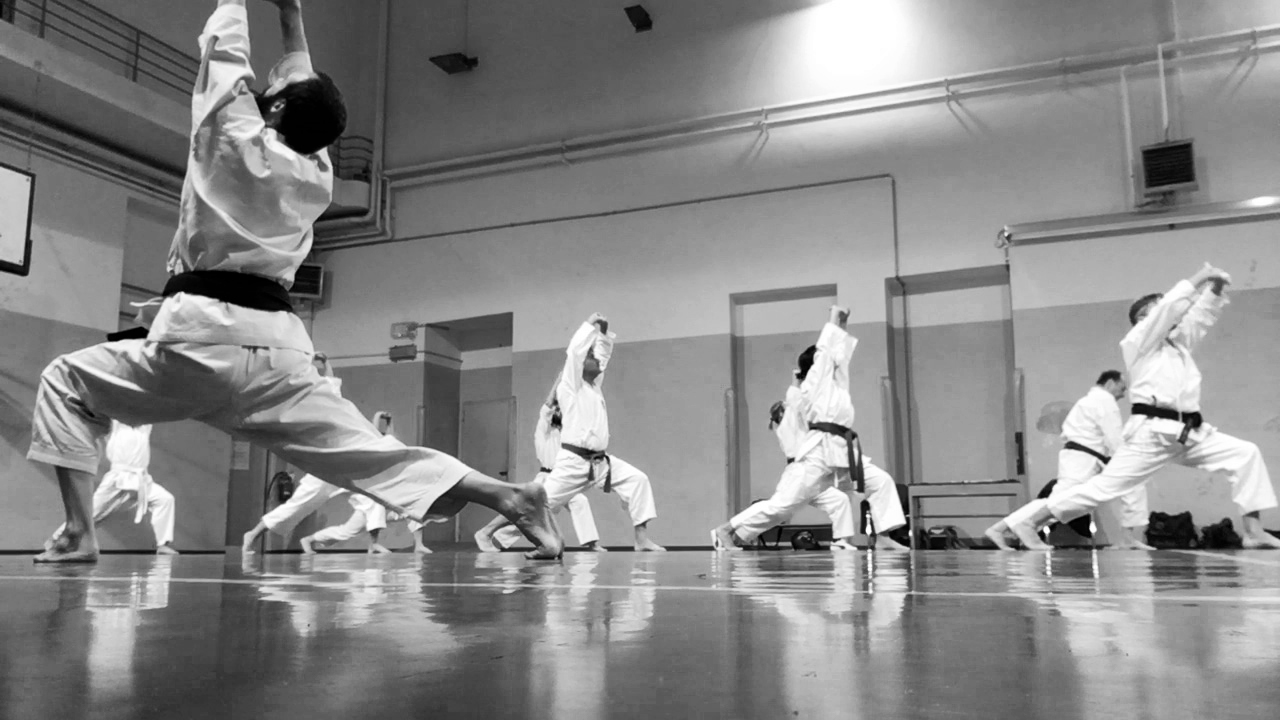
Taisō (体操) is an ancient Japanese practice of disciplined body movement. Its origins lie in traditional martial training, where it was used to develop balance, posture, coordination, and internal awareness long before modern calisthenics or fitness routines existed.
Unlike contemporary exercise systems, Taisō is not primarily a sport or a public fitness trend. It is a hidden tradition, preserved through centuries of practice by masters and carefully transmitted within Japanese martial culture.
Origins and History
Taisō was cultivated alongside samurai training and classical martial systems, serving as a foundation for more advanced combat and internal discipline. The practice emphasizes fluidity of movement, connection of body and breath, and awareness of structure and alignment.
Over generations, practitioners refined sequences to cultivate not only strength and flexibility but also mindful presence, rhythm, and the subtle interplay between effort and control. Though largely absent from mainstream awareness, Taisō remains an essential link between the physical, technical, and philosophical aspects of traditional Japanese movement.
Principles of the Practice
At its core, Taisō trains:
-
Body Awareness – understanding posture, alignment, and weight distribution
-
Coordination – linking limbs, torso, and breath into smooth, purposeful movement
-
Balance and Stability – cultivating groundedness through stance and controlled motion
-
Mindful Motion – combining rhythm, focus, and conscious attention to each movement
These principles form the backbone of Taisō, whether practiced as preparation for martial arts or as a standalone path of physical cultivation.
Modern Relevance
Though rarely encountered outside Japan, Taisō offers timeless benefits:
-
It strengthens and mobilizes the body in ways that modern gym exercises cannot replicate.
-
It trains attention and presence, connecting physical movement with mental clarity.
-
It preserves a lineage of traditional Japanese wisdom, offering a glimpse into practices that have been refined and safeguarded for centuries.
Taisō is more than exercise – it is a discipline that bridges body, mind, and tradition, quietly surviving as a hidden gem of Japanese culture.
Learn and Experience
At Nekobukai, Taisō is preserved and practiced according to these traditional principles, offering a doorway into a discipline seldom encountered outside Japan. For those seeking to explore its depth, the Taisō Training Course provides structured guidance and experiential practice.
the twelve–exercise routine
Juni enshu no taisō
Drawing inspiration from the Chinese origins of Karate – those rooted in the Northern Shaolin (Shorin) style of China – Sensei Alberto Scarpellini developed a training routine with the aim of reintroducing the “internal” component characteristic of those methods into Karate.
This is achieved by introducing a system of exercises intended not only to warm up, stretch muscles, and mobilise joints, but above all to promote the individual’s well-being. It does so by applying core concepts of Chinese medicine such as the flow of qi (ch’i) and its circulation along the meridians.
This is a foundational aspect of martial arts that is too often overlooked. The goal was to create a set of exercises that can be used both as preparation for martial activity and as a path to psycho-physical well-being.
The set of exercises is a form of Go Taisō, a combined system of warm-up, stretching, and muscle strengthening, using both static and dynamic stretching. It engages multiple muscular chains for a sufficient amount of time to significantly activate the cardio-respiratory system.
These same exercises are also designed to be practised at a gentler pace by non-martial artists as a form of exercise aimed at improving overall psycho-physical well-being.
Three core elements
The twelve-exercise routine is based on the study of three core elements:
- Common Qi Gong practices such as Baduan Jin, Yi Jin Jing, Wu Xing, and Tai Chi Chuan;
- Breathing techniques;
- Both static and dynamic stretching.
The study and practice of Qi Gong methods were essential to understand the connections between movements, organs, and meridians, with the aim of constructing each of the twelve forms to specifically target certain parts of the body.
This combination of particular movements not only improves joint mobility, muscle tone, and flexibility but also stimulates the motility of internal organs, promoting their health through self-massage and the rebalancing of qi within the meridians.
Breathing — the foundation of life itself — is another vital practice, not only in martial arts but especially in Qi Gong, where it is often the key to mobilising the qi. Furthermore, abdominal breathing, by raising and lowering the diaphragm, acts as a massage for the abdominal organs in itself.
Finally, muscle stretching — an essential component of any martial art — plays a crucial role in muscle health, as it drastically reduces the risk of injury and prevents poor postural habits that, over time, may negatively impact an individual’s quality of life.
猫武会
discover more
Contact Us
CLASSES
KARATE
Tuesday | 6:30pm – 8:00pm
Thursday | 6:30pm – 8:00pm
TAISŌ
Tuesday | 6:30pm – 8:00pm
Thursday | 6:30pm – 8:00pm
Where we are
Garsington Village Hall
Wheatley Road, Garsington
OX44, Oxford
Horspath Hub
The Old Chapel, Horspath
OX33 1RP, Oxford